9/10
Wonderful Everyday Down the Rabbit-Hole for visual novel readers
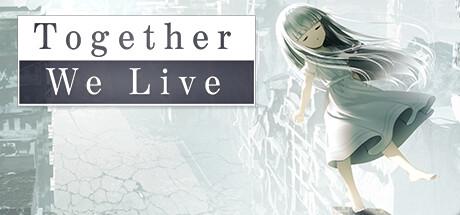
Minakami Yuki watches a battered stuffed toy fall through the air, one of countless offerings thrown to the sky in an old town ritual. She and her friends set out to find the place where the world and sky meet. This hand-drawn visual novel branches into multiple routes where philosophy, romance and eerie mystery collide.
This is a story-first visual novel that branches into multiple routes and revisits the same events through different characters, so the truth builds up across perspectives rather than arriving at once. Hand-drawn art and atmospheric music give it a strong sense of place, while detailed, three-dimensional characters carry the philosophical themes and literary references. The emotional payoff and sense of redemption make the difficult journey worthwhile, and the structure challenges the visual novel medium in ways other games do not. The trade-off is a slow pace with repetitive scenes, philosophical exposition that can feel artificial, and a full story that needs an external patch, which confuses new players. For visual novel readers in the mood for a dense, atmospheric read that thinks hard, this is a demanding but memorable one.
- Single-player
- 1 player
- Windows


What’s good
- The philosophical themes and references to literature provide deep food for thought
- The emotional payoff and sense of redemption make the difficult journey worthwhile
- The multi-perspective narrative reveals the truth by showing the same events through different characters
- The unique storytelling structure challenges the visual novel medium in ways other games do not
- The atmospheric music and hand-drawn art create a strong sense of place and mood
- The character development is detailed and three-dimensional despite the extreme circumstances
What’s not
- The game requires an external patch to access the full story, which is confusing for new players
- The pacing can be slow with repetitive scenes that drag out the mystery
- The dense philosophical exposition feels artificial or pretentious to some readers
A stuffed toy falls from the sky
Minakami Yuki is going about an ordinary day when a battered stuffed toy flutters down through the air. It looks like it has been dropped many times before, and that repetition is the point. The townspeople have long tossed gifts up toward the sky, an old custom meant to discover when they get to return there. The story follows from that single falling object, and it took home the Best Story prize at the 2010 Moe Game Awards for how far it carries the idea.
Yuki, Takashima Zakuro, Wakatsuki Kagami, and Wakatsuki Tsukasa set off together, hunting for the exact spot where the points of the divine triangle meet and earth joins sky. Two bright stars sit divided by the Milky Way, a third crowns the Northern Cross, and together the three trace the heavenly triangle overhead. You read your way toward that meeting point alongside the four of them, following the ritual's logic as the search gives the group a shared purpose.

Several routes over one two week period
Wonderful Everyday is built as multiple routes, and each route is a chapter that walks through mostly the same events of a two week period from a different character perspective. You meet a scene you have already read, then get it again through the eyes of someone who was standing somewhere else when it happened, which changes what the moment means. Five recurring subjects bind the routes together: how sky and world relate, how things start and how they end, the pull between literature and science, what makes a savior different from a hero, and the bond between brother and sister. Each pass over the same fortnight turns one of them over, and reading across the different character perspectives is what assembles the full sequence of events. The repetition is deliberate, so a conversation that seemed ordinary the first time gains weight once you know who else was listening.

Two pills, and only one of them is gentle
The game hands you a choice about the patch before you start. Take the blue pill and leave it off, and you get the starring role in a fluffy yuri adventure. Reality warps as the route descends, and the cuteness that colours the characters sits right next to material that's genuinely hard to read. This is the surreal, unsettling core of the experience, so the choice is really about how much of it you want to see, knowing the gentle option leaves the story unfinished.

A philosophy lecture in the middle of the story
A visual novel with this kind of philosophical nature earns its reputation by doing the teaching inside the dialogue. You won't need a reading list before you start: the game brings up the ideas itself, works through them in terms of Wittgenstein, then breaks them down until they're easy to chew on. The mature themes sit right beside that discussion, so a quiet conversation about what the sky and the world actually are can sit a page away from something far uglier. Some readers find the exposition a little heavy-handed when a character spells an idea out at length, but the payoff is that you never have to guess what a scene is reaching for. Follow the arguments as they surface and the story gains a second layer, one that keeps turning over the same questions from each new perspective.
Questions before you start?
What is the basic premise of the story?
Minakami Yuki watches a battered stuffed toy fall through the air, which turns out to be connected to an old town ritual of offering gifts upward, a way of finding the day people return to the sky. Yuki and her three companions, Zakuro, Kagami and Tsukasa, head out together to hunt for the exact spot where the heavenly triangle's points meet, where world and sky join.
How does the multi-route structure work?
The game is built as multiple routes, and each route is a chapter that walks through mostly the same events of a two week period from a different character perspective. You read a scene, then meet it again through the eyes of someone who was somewhere else when it happened, which changes what the moment means. Reading across the different character perspectives is what assembles the full sequence of events.
Is the philosophical discussion accessible without prior knowledge?
Yes. The game brings up the ideas itself and works through them in terms of Wittgenstein, breaking them down until they're easy to follow. No reading list is needed beforehand, and you never have to guess what a scene is reaching for. Some readers find the exposition heavy-handed when a character spells an idea out at length, but the arguments stay on the page.