 6/10
Neverending Nightmares Ink-Black Nightmares You Creep Through
Guide a defenseless Thomas through stacked dreams, keeping out of sight until the way back to reality appears.
Is Neverending Nightmares for you?
Neverending Nightmares is a short, hand-drawn descent through Thomas's nightmares where atmosphere and story carry the weight and combat barely appears. The black and white art, colored interactive objects, dark ambient score and limited stamina give it a steady, oppressive tension, and the branching dream logic pulls you back toward the two endings you have not seen. Long stretches of walking through similar rooms and very simple puzzles keep the pace slow, which matters if you want busy gameplay. It earns its two hours by making you sit with dread and turn an unresolved story over in your head, and that's exactly the kind of horror it delivers.
- Single-player
- 1 player
- Windows
- macOS
- Linux

What’s good
- The hand-drawn black and white art style with colored highlights feels like a moving comic
- The atmospheric sound design and music create a tense and oppressive mood
- The psychological horror focuses on dread and unease rather than traditional jump scares
- The story has branching paths leading to three different endings
- The game is short, taking about two hours for one playthrough
What’s not
- The gameplay is repetitive with long periods of walking through similar rooms
- The puzzles are very simple or non-existent
- The story is confusing and lacks clear explanation
Neverending Nightmares is a hand-drawn psychological horror where you play Thomas, who wakes from a nightmare only to find he is still dreaming. You walk down through layers of hellish dreamscapes, hiding from horrifying apparitions and outrunning your inner demons while your asthma leaves you gasping. Black and white art, blood in red, and an oppressive dark ambient score make every corridor feel heavy with dread.
Down Through Layers That Won't Hold Still
Thomas wakes from a terrible nightmare and finds he is still dreaming. Each layer of hellish dreamscapes opens into another, and the farther down he goes the less the place follows ordinary sense. It runs on dream logic that defies rational explanation, so a hallway you have just walked through can come back changed, and you're left sorting the scenes in your head looking for a rule that holds.
Nothing in your hands levels the odds. When a horrifying apparition shows up, you hide or you outrun your inner demons, which shrinks every encounter to one decision: how far you can push before you have to stop. Waking up into reality is what the whole descent is for, and each layer of hellish dreamscapes makes you less sure what that word will mean.

Ink, and the Two Things That Aren't Ink
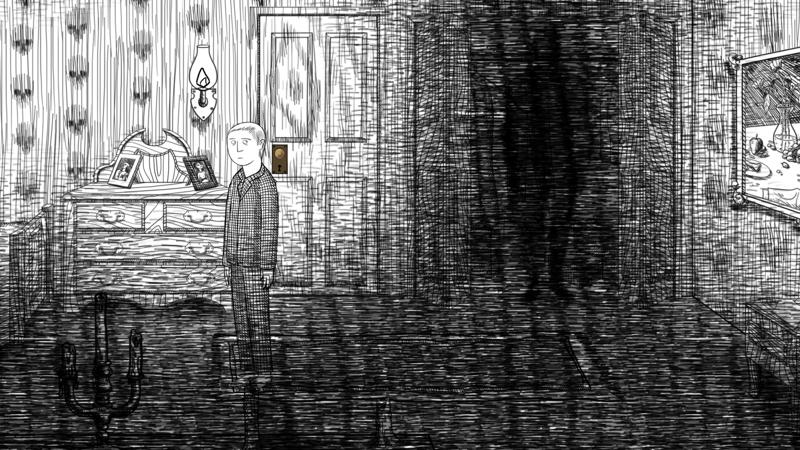
The whole game is drawn in black and white, and that restraint is what gives it its moody, dark atmosphere. Rooms, faces and corridors come out in stark contrast, and the shadows become part of the drawing itself. The line work, the hatched darkness, the way a quiet scene can still feel macabre: all of it calls strongly back to Edward Gorey.
Color arrives as a signal. Blood and the objects you can interact with are the only things that carry color. A spill of color on blood is never just decoration, and a tinted object tells you there's something there to touch. Everything else stays in ink, and your eye learns quickly to hunt for the exception in a frame. In a game where you spend most of your time walking and looking, that habit becomes the rhythm of play: scan, spot the one thing that breaks the pattern, move toward it.

Dread Instead of Jump Scares
Horror here doesn't come from jump scares trying to startle you. The target is a tense and oppressive atmosphere, shaped around real experience with mental illness, and it works by making you carry your own fear down the corridor with you. Dread does the work that a sudden loud noise would do elsewhere: the darkness, the score, the things you're fairly sure you saw in the last frame.
Vulnerability has a body here. Thomas has asthma, and his stamina gives out after a short sprint, so he has to stop and get his breath at exactly the wrong moment. You can hold your position and hope the apparition drifts past, or you can spend the little running you have and accept where it leaves you. Every chase becomes arithmetic you didn't want to do, and the quiet stretches between them stay heavy because you know how quickly the fuel runs out.

One Run, Then Another Way Through
One playthrough reaches an ending in an hour and a half to two, so a full descent fits inside a single evening. The run ends somewhere and the question of where it could have ended differently doesn't, because branching paths split into 3 different endings, each with its own unique content leading up to it.
The route is shaped by dream logic that defies rational explanation, so you finish one run with scenes that still refuse to line up and a reason to go back and see what the other path made of them. Replaying is the point of that design: the short length lowers the cost of another pass, and the endings give each pass a destination worth earning. You'll reach an ending you can defend, then spend the walk to the next starting point turning the whole story over in your head.

Questions before you go back to sleep?
What kind of gameplay should you expect?
Walking, mostly. You guide Thomas through the layers of dreamscapes, scanning black and white frames for the colored objects you can interact with, and hiding or running when a horrifying apparition shows up. There's little in your hands to fight with, and the puzzles are simple. The weight sits on the atmosphere and the story. Long stretches of wandering through similar rooms will test your patience if you want constant action.
How long does it take to finish?
A playthrough to one ending runs an hour and a half to two. Branching paths split into 3 different endings, each reached by its own route of content. Finishing them all takes a few passes. The short length keeps each replay cheap to attempt.
Is this game scary?
It leans on dread instead of jump scares. The horror comes from a tense, oppressive atmosphere, a dark ambient score, and the knowledge that you're defenseless against what the nightmares throw at you. Thomas has asthma. His stamina gives out quickly, and every chase turns into a hard choice about how much running you have left. Expect unease and dread more than sudden shocks.
Does the story make sense?
Often not on a first pass, and that's deliberate. The plot runs on bizarre dream logic that defies rational explanation. Scenes can end without tidy explanation. Part of the point is sorting through what you saw, deciding which horrors are manifestations of Thomas's psychological state, and replaying toward one of the other endings to see what the route does with the same material.


