 10/10
Hotline Miami Plan the room, die, run it again
You take jobs from a cryptic caller and clear each neon-soaked floor of the mobsters inside it, one room at a time.
Is Hotline Miami for you?
Hotline Miami drops you over a floor full of enemies and asks you to plan each room quickly, die fast, and restart until a run finally clicks. The saturated pixel art, the synthwave soundtrack, and the animal masks that change how you approach a level make it a stylish arcade package worth replaying, and the surreal story keeps you turning it over after the credits. It can be genuinely frustrating: the difficulty is steep, enemies react instantly and seem to know where you are, and the flashing lights and screen shake can wear on you. For a player who wants tight, fast combat and a story that refuses to explain itself, it delivers exactly that, and it's best taken in short, sharp sessions.
- Single-player
- 1 player
- Windows
- macOS
- Linux


What’s good
- The driving synthwave soundtrack perfectly matches the neon-soaked 80s atmosphere and chaotic action
- Instant restarting with the R key keeps the flow going despite the brutal one-hit death mechanic
- The surreal, dreamlike story leaves players with lingering questions and theories after the credits roll
- The fast-paced, top-down combat feels like a tactical puzzle where every move must be precise
- The pixel art visuals and saturated colors create a stylish, retro arcade aesthetic
- Animal masks provide unique bonuses that add variety to each run and encourage experimentation
- Clearing a level without mistakes provides an intense rush of adrenaline and satisfaction
What’s not
- The steep difficulty and unforgiving nature can be frustrating for players with slower reflexes
- Enemy AI can feel unfair with instant reactions and omniscient awareness of player position
- Intense flashing lights, screen shake, and visual effects may cause discomfort or headaches
Hotline Miami drops you into an alternative 1989 Miami as a mysterious antihero who acts on orders left by voices on your answering machine. Rooms fill with vicious enemies and every bullet kills, so you plan your entry, react fast, and restart in seconds until a floor falls perfectly into place beneath a driving synthwave soundtrack.
A rampage hired by phone
The voices on your answering machine pick the jobs. In an alternative 1989 Miami you play a mysterious antihero who follows those messages and cuts into the city's criminal underworld with blood up, never getting a firm grip on why you keep doing it.
That work is raw brutality: fast, unforgiving fights built on hard-boiled shooting and close combat where skulls get crushed. You move fast, you hit hard, and the bodies stay where they fall. Violence here isn't an occasional climax you build toward, it's the language you speak from the first screen onward, and the game states it in the plainest, most graphic terms it has.
Every room is a plan you play out
Doors open onto rooms where you're outnumbered by vicious enemies, and the only way through is to choreograph your way past them. You read the space before you move, decide who drops first, pick the opening angle, and commit. Hesitate and the room takes you, since nothing slows down and a single bullet is enough to end the attempt, yours or theirs.
That rule turns each floor into a small tactical puzzle you solve at speed. Quick and decisive moves are what survival asks for, and a clean clear where everything lands is the reward you chase. Rooms come back after each death, so the plan keeps getting sharper while the game keeps asking more of you. Running beneath it all is the question of who ordered the killings and why you obey, and moving this fast leaves you no quiet moment to work it out.
Neon colors and a dream that will not sit still
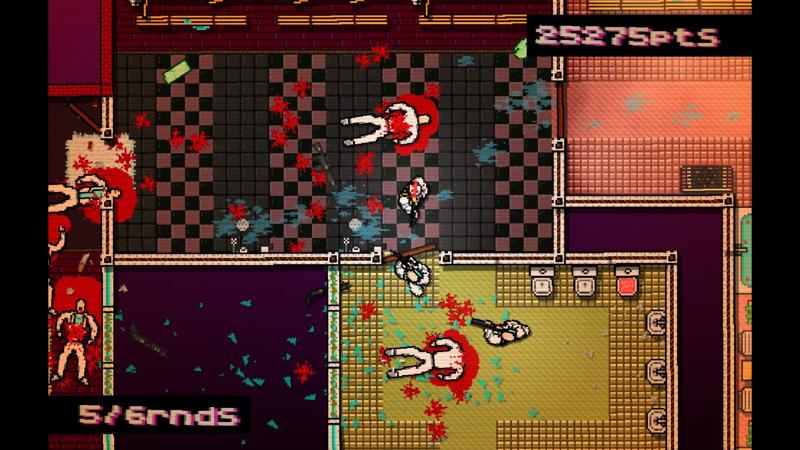
Hotline Miami looks like nothing else: pixel art pushed to loud, saturated colors that smear across the screen as you cut through rooms. The palette carries the whole mood, bright and garish one moment, sickly and unsettling the next, which suits a game where a surreal chain of events keeps sliding out from under you. Doors, phones, empty apartments and messages that make less sense each time: the story never hands you a steady footing, and by the end you're left turning over what you did and why you were so willing to do it.
Underneath runs a driving soundtrack, a synthwave pulse that sets your pace before you have thought about it, and when a clear comes together the music and the movement lock in. Against that rush sits a brutally unforgiving challenge: deaths come fast, the game asks you to hold a high speed under pressure, and a run that finally lands gives a rush worth chasing again. The screen will flash and shake while all of this happens, which is worth knowing if strong visual effects wear on you.
What players ask before buying Hotline Miami?
What makes the gameplay feel different from other shooters?
You see the whole room from above and plan against it like a puzzle instead of aiming down a corridor. Every shot is deadly, yours and theirs, and one wrong step ends the attempt instantly. Animal masks grant unique bonuses that change how you approach a floor, which pushes you to try different kit on runs you have already cleared.
How does the difficulty affect the experience?
The challenge is brutally unforgiving and the difficulty is steep, which can frustrate you if your reflexes run slow. Enemy AI reacts instantly and knows where you are. Deaths often feel unfair. Pressing the R key restarts the level right away, so you drop straight back into the run with the pace still hot. Clearing a level without mistakes gives a real rush.
What kind of story can you expect?
A surreal chain of events sits under the violence: mysterious voices on an answering machine give you jobs, and the reasons behind them stay slippery as you go. The dreamlike narrative leaves you with lingering questions and theories after the credits roll, and it makes you weigh your own appetite for the killing as the events pile up.


