
 8/10
帝国:权杖与文明 Grow one farm into an empire
Choose a civilization, lead an army of heroes from different eras, and outmaneuver rival players for cities and landmarks across a shared map.
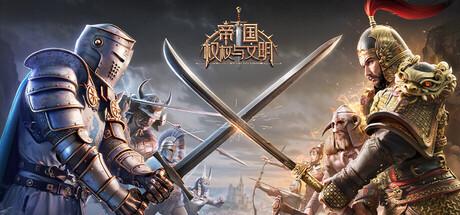
Start with a single plot of farmland and grow it into an empire, then recruit over 200 historical figures who fight at your side with skills of their own. Deploy phalanxes, heavy cavalry and fleets across a 2.5D sandbox map in real-time battles, where terrain and formation beat raw numbers. Real-time PvP and seasonal server wars keep the whole map contested.
- Single-player
- MMO
- PvP
- Windows
From one farm to an empire
Before any of that contest matters, you have to pick what you are fighting as. Choose a Chinese dynasty, the Roman Empire, Viking forces, or Persian trade routes, and each choice sets the starting point of a civilization that runs like an ancient warfare simulator. Then everything begins with one plot of farmland. You select it, and from that first field your territory starts to spread outward, tile by tile, across the sandbox. Land means resources, and resources mean you can push further, so expansion and supply feed each other. As the borders grow, the population grows with them, which is why the main city needs upgrading along the way: a bigger settlement supports more people, and more people keep the campaign moving. It is a slow climb from a single field to something with cities, armies and a frontier to defend, and every stage of it is a decision about where to spend what you have. The civilization you picked at the start is the one writing that history, and it will be the one facing everyone else's on the shared map.

Heroes who break the timeline
A growing empire still needs someone to lead its armies, and history has plenty of candidates. Over 200 historical figures break through the barriers of time to fight alongside you, which means the roster is not bound to the civilization you picked at the start. Bai Qi can stand next to Octavian, Wu Zetian beside Cleopatra, all appearing together on the battlefield rather than in separate campaigns. That collision is the point: your army becomes a mix of eras instead of a single period's uniform. Each hero carries unique skills, so they are not just stat blocks sitting in a menu. Those skills shape how you compose the army and which tactics are even available to you, because a phalanx with one hero behind it plays differently from the same phalanx with another. Picking a pair or a lineup is therefore a tactical decision before the fighting starts, and it is one you can revisit as your roster fills out. Who you bring decides what your army can do once the battle begins.

Win with terrain, not numbers
Once your heroes are chosen, the next decision is where and how to use them. Battles take place on a 2.5D sandbox map where you deploy troops for land and sea combat at the same time, so a campaign is never only a front-line affair. Form a phalanx on one flank, ride heavy cavalry through a gap on another, and the shape of your line starts to matter more than its size. The sea counts too: launch naval blockades to control trade and coastlines, which cuts what your opponent can move and where they can land. Because the game emphasizes strategy over raw numbers, a larger army does not automatically win. You have to read terrain, pick formations, and time hero abilities to outmaneuver the other side, and each of those is a choice made during the fight rather than before it. That is what makes a battle feel like a puzzle with real stakes: the answer is rarely just throwing more troops at it, and finding the line that works is the satisfying part.

One map, everyone's ambition
Winning a battle only matters if there is someone to take it from, and the global map is full of them. The core experience is competitive, featuring real-time PvP matches and seasonal server wars, so the opponents on that map are other people making the same calculations you are. You clash over cities, capture landmarks, and vie for supremacy, each objective worth taking because it shifts what you can reach next. That turns every border into a live question rather than a line on a page. Seasonal server wars give all of it a rhythm, a stretch of time in which positions can change hands before the contest resets. It is the same army, terrain and hero skills you have been building, now pointed at players who are adapting as fast as you are. The sandbox stops being a place to expand and becomes a place to hold.


Questions before you start?
What makes this different from other strategy games?
It refuses raw numbers as the deciding factor. Battles are won through terrain, formations and hero abilities rather than a bigger army, and every campaign has more than one solution. On top of that, heroes from across time fight together, so your roster mixes civilizations instead of sticking to one era, and the whole thing plays out on a shared map where other players are expanding at the same time.
How do you start your first campaign?
Pick a civilization first, such as a Chinese dynasty, the Roman Empire, Viking forces or Persian trade routes, then select your first plot of farmland. From that single field you expand your territory, manage the resources it produces, and upgrade your main city to support the growing population. Your chosen heroes join the army from there, and the global map is waiting once your borders are established.
Can you play with friends in co-op?
The core experience is competitive, with real-time PvP matches and seasonal server wars against other players on the global map. Working with others still matters: cooperation is a lifeline in battle, and there is an ally assistance mechanic that helps you take inner city plots you could not拿下 alone. So you are never only fighting on your own, but the contest itself is against real opponents.
What happens if you lose a battle?
A lost battle costs you position on the shared map, because the cities, landmarks and borders you were contesting stay in other hands. The map is still live, so you can regroup and strike again elsewhere, and the seasonal rhythm of server wars means positions change over time. Losing one engagement is a setback rather than the end of a campaign.


